


Higher Education Opportunity Program (HEOP)
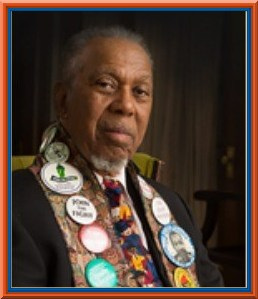
Arthur O. Eve
Member of the New York State Assembly (1967–2003) and Deputy Speaker of the Assembly (1979–2003) representing districts in Buffalo, New York
HEOP Mission
The Arthur O. Eve Higher Education Opportunity Program (HEOP) provides a broad range of services to New York State residents who, because of educational and economic circumstances, would otherwise be unable to attend a postsecondary educational institution. Each HEOP institution must ensure that HEOP students are provided with sufficient academic support services, tuition assistance, supplemental financial assistance, and full need packaging to enable them to successfully complete the institutional components required for graduation.
HEOP Objectives
- Provide access to postsecondary education to eligible students
- Identify, evaluate, and recruit eligible students and enable them to complete a higher education experience
- Improve the retention and graduation rates of disadvantaged students
HEOP Services
- Provides funds to assist in the screening and testing of prospective students
- Provides structured academic support services including a pre-entry summer program, counseling, tutoring, and remedial/developmental coursework
- Provides supplemental financial and tuition assistance toward their college expenses
HEOP addresses students needs by
- Introducing students to college expectations via a pre-entry summer program.
- Offering academic, career, financial, and career counseling.
- Providing one-on-one and small-group tutoring.
- Offering remedial, developmental, and support services .
Contact Information:
New York State Education Department
Office of Postsecondary Access, Support, and Success
Arthur O. Eve Higher Education Opportunity Program
89 Washington Avenue, EBA 960
Albany, NY 12234
(518) 474-3719
cdpu@nysed.gov
*Please note, HEOP is not a scholarship given to individual students, but a grant awarded to selected independent colleges and universities. Students cannot apply to HEOP through NYSED's website. Students who are interested in HEOP must directly contact participating HEOP colleges & universities for the college and/or university's application information. Please see the HEOP directory for participating college & university's contact information. Students interested in EOP should visit SUNY's website for more information. Students interested in SEEK/CD should visit CUNY's website for more information.
Student Testimonials

Danangelowe Spencer
Mount Saint Mary College • Class of 2017

Rachel Alwardt
Cazenovia College • Class of 2019
Major: Interior Design
Minor: Business
Hometown: LeRoy, NY
Clubs, Organizations, Leadership Roles and Awards Received: Interior Design Club
HEOP means hope for me to meet my success as a young learner. It has helped me with being eligible to attend my first-choice college, and it feels like a family. Thanks to HEOP, I feel like I am home.

Kevin Herrera
Hamilton College • Class of 2016
Major: Theatre and Geoscience
Hometown: Jackson Heights, NY
Clubs, Organizations, Leadership Roles and Awards Received: Tropical Sol Dance group, Hogwarts at Hamilton President, RA, Event Staff Manager, Untitled at Large President, Edwin Barrett Theatre Prize, Karen Williams Theatre Prize
I would not have come to Hamilton if it weren’t for HEOP. I knew that I would have a support network and people who would have my back no matter what. I’ve been blessed to have people who care for me and push me to do my best, and I wouldn’t feel that if not for HEOP.

James White
D’Youville College • Class of 2016

Anna Do
Hamilton College • Class of 2018

Brandi Mapson
St. Bonaventure University • Class of 2016
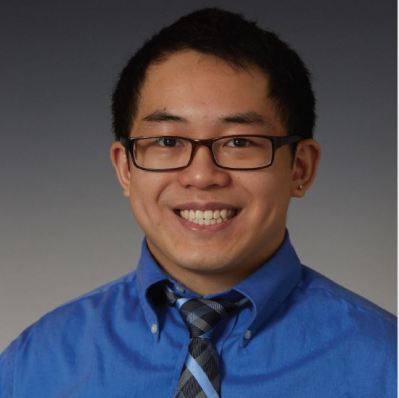
Andy Wu
Syracuse University • Class of 2016

Bibi Awal
Syracuse University • Class of 2016